Taking Shade’s Toy Class with Chai – part 1


This is the first of several special-topics posts I am going to link to in future Chaiary posts rather than inserting all video links directly into Chai’s diary!


Shade Whitesel runs a fantastic toy play class over at Fenzi Dog Sports Academy. I’ve taken it twice at Gold now simply because it’s SO good and highly motivating for me, too.

If you need help with toy play or know how to teach toy play but are looking for fun, community and accountability, hop into that class! Here’s a link where you should be able to find whenever it runs next (as well as Shade’s other classes – 10/10 would recommend anything she teaches!)


So this post is about Chai’s tug toy journey with Shade. We took the class in June 2023 so I’d keep up my own motivation and have accountability.

Since Chai already knows fetch games, I decided to focus on tugging – something I haven’t done with her at all. I’ll share all of my class videos, but if you want to know more details about how they came to be, what lecture they are based on or why Shade recommended what, you’ll have to check out the class yourself!

How to make sense of this post:

When there is text to go with my videos, it’s part of my class posts from June and partly thoughts I’m adding now. I sometimes copy/pasted my class posts into my video description which I can now (now being September 11, several months after the class) go back to and copy/paste into this blog post! When I ask questions or use the word “you”1 in the text that goes with a particular video, I’m addressing Shade. When I use the name “Shade,” I either added this thought today or changed the “you” from the original post to “Shade” because the name sounded better to me in a particular sentence or context.

June 1, 2023: tug baseline

Note: I have never played tug with Chai before (it didn’t seem a priority behavior for a foster dog who might go to a companion home). In this video, I’m just seeing what she thinks about various tug toy options, most of which are new to her.

I’ll have to bring down my own arousal for her next time! I can tell that Chai is not used to my Malinois toy play state of mind! It is fun how different she is from Phoebe, Grit and Game who all latched on to anything they were presented with and didn’t let go from the start!

June 3, 2023: a flirt pole and a fleece tug for Chai!

I am writing this post 3 months after the fact, so I hope to get things right – I believe this was my second class video. I made a flirt pole to engage Chai with a fleece tug. Unfortunately, Game’s mat was harmed in the making of this fleece tug: I braided two identical onces and cut up Game’s fleece mat for it.

In any case, we’re getting some lovely chasing and tentative tugging on this toy! It’s soft (perfect for teething puppies), it runs away, and the distance between me and the fleece tug that is created by the flirt pole (a broom stick and a strong – I usually make my own flirt poles) reduces pressure from my side. I’m happy with this first flirt pole session!

June 5, 2023: playing with the fleece tug on my bed and with the flirt pole on the roof

Clips from 2 short sessions. My Observations:

+ Chai will occasionally target my hands rather than the toy (that only happened when playing on the bed).
+ It is very easy to (accidentally) pull the toy out of her mouth. Is that okay because it will teach her to clamp down more should I be more careful so it doesn’t happen?

I have my own answers to questions like this last one, but enjoy very much following an experienced trainer’s advice. I do not remember Shade’s response but I’m pretty sure what I ended up doing is starting gently so Chai is unlikely to constantly loose the toy, but making it run away immediately and harder to catch anytime she did let go or I accidentally pulled it out of her mouth: critters don’t sit around waiting to be eaten by predators but will use any opportunity to escape!

June 6, 2023: Chai’s second time playing with the flirt pole and tugging on the roof!

I aimed for gentle, steady pulling (not jerky). What should I do when I have let her win and she’s shaking it dead, like at 00:12-00:18 in the video below? I kept the flirt pole string loose and just admired her strength this time.

At 00:20 she was holding it and lying down on it, so I got the second identical fleece tug out to get her off the one on the flirt pole without conflict. Then I reactivated the flirt pole.

At 00:34/35 I was about to let her win after steady pressure for 2 seconds, and right then I accidentally pulled it out of her mouth again. Ooops! Sorry, Chai!

01:28 in the very end: “Treats” is my scatter cue and how I end the session and get the toys back.

June 7, 2023: playing with the fleece tugs on the bed (my non-slip indoors surface) for the second time

A compilation of this morning’s best bed tug moments. It’s fun to work with someone so different from the Mals and GSDs I’ve mostly played with over the last few years! (I’ve also played with a ferociously tugging Border Collie, Mick, whose personality is quite different from Chai’s, and a ferociously tugging pug!) There must have been plenty of others, but these are the ones I actively and personally worked with a lot and had the most fun with!

Even in personal play, Chai is being really gentle. I’m used to blood, bruises, torn clothes, dog-head-hooks to the chin and battle scars from social play! (I love roughhousing – it’s only partly the dogs. And yes, I exaggerate!) It is only toys and humans Chai is gentle with though. When she plays with Game or crunches down on a plastic bottle, she crushes those sharky teeth right in!

June 8, 2023: playing with fleece tugs on the roof without a flirt pole!

Chai is pulling back VERY gently (I am saying that from a crazy Phoebe-Poodle/Mal baseline) – I just make it look as if she was pulling strongly. In the second rep, she caught the tug too fast for me to get a chance to present a good striking target. Otherwise, we’re having a great time!

June 11, 2023: tug attempts on the roof as well as on the bed – a comparison

Roof play:

Our tug attempt on the roof did not go as well this morning. Chai lay down and never brought the toy back, so I ended quickly. (It’s warmer than usual and she has had play time with Game before – tomorrow morning, I’ll try roof play before any of this and play earlier in the day.)

Or did I overdo it this time and tugged too long rather than making it too easy? (Shade has suggested I make things a little more difficult for Chai.)

Indoors play:

We took a second stab at tugging in the apartment. My floor is not an ideal tugging surface because it is slippery, but I know Chai gravitates to the bed – so I wanted to see what would happen if I tugged her off the bed and then ran away back TO the bed. She brought the toy back all the way every time. It’s about the bed I suspect, not me, because the bed is the best place to chew on something … Hrmmm …

June 12, 2023: another roof tug session

This session was right after getting up with a puppy full of energy and okay temperatures (it’s been really hot during the day but mornings are okay).

In this session, Chai brought the toy part of the way back once, about two thirds into the session.

What do you think about bringing out toy #2 when I can’t convince her to bring back toy #1 (like 00:20/21)? I can’t ask her, but I get the impression that she prefers tugging with me over chewing a toy on the floor – but she has not figured out that bringing back the tug is a part of that game …

What happens most of the time is that I try to encourage her after running away, and she then comes running but forgets the toy (see 00:41-00:43). I then ask her where her toy is, and she goes back to the toy and looks at me expectantly or lies down again to chew (00:47-00:49).

The last part of the clip (00:50-00:59) is the one time in this session she brought the toy partially with her when I encouraged her to come. I can’t tell if I did something differently in this rep than in the other ones or if it was a coincidence.

We’ve also had a session on the bed, and Chai continues predictably gravitating back to it when I’m on it. I’m flashing my hands in target-them-with-the-toy position. She does not target yet but runs towards me/my hands (because I’m on the bed).

Should I keep practicing in both locations or modify something?

June 13, 2023: a blanket target on the roof!

Shade had the great idea to use a blanket as a “target” to run towards on the roof – a stand-in for the bed. It worked like a charm every single time I ran to the blanket. (It’s clearly the blanket, not me. When I tried running somewhere else, she’d still go to the blanket.)

I have a second identical blanket – should I stick to one or try with two?

June 14, 2023: our second session with a blanket target on the roof.

Shade’s input:

“In order to transfer off the mat, we need to have physical signals (hands to target and frontal body position) that happen before she sees the mat.”

My response:

Good point, that makes a lot of sense! In today’s session, I only got the head thrashing movement once. In general, she is letting me lead her more with the toy now that I’m pulling more strongly – rather than pulling back, she’ll often walk with me with her mouth on the toy. I’ve been grabbing the toy to continue tugging as soon as she reaches the mat. I wonder if that’s not the best strategy. Should I only put my hands on the toy when she lets go of it – even if I’ve flashed my target hands at her before? The reason I wonder is that in the last rep of today’s session, she lay down off the mat (right next to it) with the toy rather than coming all the way back to me and the mat. I ended there with a scatter to get Shade’s opinion before I continue.


This was part 1 of our work in Shade’s class (our first 10 videos)! Here is part 2 and here’s part 3.


(1) In this particular post, “you” never refers to “you, the reader.”

Day 48 – May 24, 2023: fun with positions and marker cues!

We didn’t go on any adventures or exciting outings today – except for pee breaks, we all stayed in, and it was …

Positions

… time for obediency stuff! We worked on positions in two sessions: one for Chai’s breakfast and the other one for her lunch.

Breakfast session

You’re about to see a 10 minute long uninterrupted positions training session with a 5 months old puppy. Is this what I, C, Professional Dog Trainer, would recommend anyone do with their 5 months old puppy? No. I’d say keep sessions to 2 minutes or, if you have a really avid worker, 3 minutes max at this age to ensure your puppy learns that training is a privilege rather than a chore. So why am I not heeding my own advice? Because I’m me and some days I can’t help it. I am grateful for having dogs who just roll with it! Also note that this is a day where training is pretty much all Chai got to do (except for pee outings which at this point mostly only involve Game peeing).

Session profile:

Cues: sit (sitz), stand (steh) and down (platz)
Announcements: All done (I will not work or play with you anymore even if you pester me)
Marker cues: tongue click (treat from hand), Good (room service), treats (scatter cue; in the very end of this video)
Home position: hands behind my back
Transition behavior (what I do between (marker) cues and (treat or lure) hand movement: blink once


Lunch session

Session profile:

Same as above.

Look how far her understanding has come between the two sessions! Go Chai! This is looking fantastic!

In some of the reps, it looks as if Chai was guessing positions. That is entirely possible … and it doesn’t bother me. She can play a guessing game and get reinforced anytime she gets it right. Over time, this leads to learning. Notice that Chai is learning several new things at the same time in this session: the marker cue “Good” (room service) and all three positions. She does not need to understand every single word I say in order for us to have an enriching training conversation. It’s like learning a new language or reading in a foreign language: you don’t need to know every single word or grammar rule in order to follow the plot.

PS: when I say “Yes,” it’s just a commentary on Chai having done well. It is not a marker cue.

PPS: the reason Game is chilling on her mat behind us is that she has excellent mat skills. If there was no mat, she would very much be participating!

Husbandry

+ Chai got the claws on her left and right back paws clipped and did great.

The art of doing nothing

She was able to hang out in her luxury kennel – the bathrooom – with visitors and Game in the main room. Good puppy keeping the FOMO from raising its head! It is just as important to include your puppy in your general activities as it is to occasionally have them NOT participate. Both are important skills for your future life together!

Back in CDMX: day 35 – May 11, 2023

+ Today, I upped the difficulty level of Chai’s formal recall (“Schnee”) in real life situations at UNAM – so I upped the reinforcer accordingly: hotdogs for the win! Chai loved them and had A LOT. (Up until now, she’s only worked for kibble.)

A check in and a relatively easy whistle recall – kibble for check-ins, hot dogs for our 2-dog whistle recall:

+ An UNAM student offered the back of their hand for Chai to sniff and then touched the back of her head – and she didn’t mind! Wow, puppy! You are being so brave with random strangers!

Below, Chrissi being overconfident in one of their recalls, the stranger reaching for Chai, meeting a dog and lots of exploring! Come join aus at Las Islas:

… after seeing me use “Schnee” in a situation that was clearly too hard (The Popcorn Incident), below is an appropriate recall level for formal recalls rewarded with hotdogs: Chai is running the other way when I call. Not suuuper easy and not too hard either.

Game comes back too because she loves hotdogs – but every dog only gets them on their own recall cue or the multi-dog cue (whistle). Sorry, Game!

+ Chai mastered going up and down the see-through stairs at UNAM!

UNAM fun with Game. I love the color of bougainvilleas!

+ Chai saw lots of umbrellas and rain gear because it started raining as we were there!

+ The wind picked up too, and Chai startled seeing the big flag blow in the wind, and then had a similar reaction to a poster being moved by the wind. She quickly got over the poster, and we walked up to the UNAM flag to see it wasn’t a monster. Chai was able to quickly shake off both startles! I love a puppy with a good bounce-back!

I happened to take a picture right at Chai’s poster startle moment. You can’t see the poster – it’s up and to the right. Imagine a straight line going up from Game’s butt to the edge of the wall. That’s where the poster is.

Going right up to the previously scary flag blowing in the wind! (Actually, the wind must have picked up before the rain started: I can see in the pictures that the ground is still dry.)

+ Game peed outside twice after Game pooped and once completely independently! Go puppy! Spending lots of time outside and in one area (that becomes boring/familiar over time) certainly helps remind Chai that maybe she’d like to pee! So does Game who is still the best role model for outside toiletry.

+ I picked Chai up and rode the scary elevator with her in my arms twice.

+ Husbandry: “Brush!”, and “Claws!” on the right back paw. (I thought I’d spread out her paw husbandry over the week now that we’re settling back into some sort of everyday life.)

Chaiary, day 31: May 7, 2023

Chai, Game and I had a full day in Mexico City before our road trip tomorrow! We did a bunch of stuff but kept it low key:

+ Chai joined me on a trip to the lavandería and a loop through the Walmart corridor in her backpack.

+ Husbandry: “Brush!” and “Claws!” (all four paws and doing well!)

+ We worked some more on her understanding of the different meaning of treats in my open hand versus closed fist.

+ We worked on distinguishing “dish” (take food from bowl) from a tongue click (come to my hand for food).

+ We walked to Calle Cuauhtémoc and back and Chai did REALLY well passing the two Pits both going out and coming back!

My neighbor has a car repair shop – and, true to the stereotype, two (lovely!) Pit Bull Terriers.


I’ll end with another paragraph that, like the footnote in Scarlett’s post, has taken me a while to phrase more or less the way I wanted. Future posts should be smooth sailing again, so you can expect your daily Chai update AND eventually (I promise; I’ve started doing weekly digests) we’ll catch up to the present day!


Thank you …

… for all our inspiring and nerdy dog training conversations, Chris Cernac, over the last few months. I’ve loved them. Thank you for sharing your thoughts and questions, your knowledge and points of view. I’m sure you will (if you look) see traces of you in my future training. I’ll give you credit when I can. In case you read this one day: know that I appreciate this part of our paths crossing.

I realize that leaving Prince and Chris pictures and stories out of Chai’s May diaries is leaving out part of her experience, but I can’t write about Prince and you without also writing about personal things that I don’t want to share online at this point. It’s not about you – I wish you well. This is just me not wanting to share these particular personal stories with a wider audience today.

Chaiary, days 23-24: April 29-30, 2023

Day 23, April 29, 2023

We started the day with another trip to the furniture market where Chai voluntarily approached and got fed by two more strangers.

The furniture market is great for puppy in-store training!

Food hand positions: a common vocabulary

Back home, I worked on the meaning of different food hand positions:

+ I use a particular hand position for luring that means “follow my treat until I release it.”

+ A closed fist means “stay away from the food.”

+ Food in open flat hand means “take the treat.”

Developing a common vocabulary about food hand positions makes a HUGE difference for future training!

… and more exciting things!

+ Both dogs worked on our platform game and Chai worked on positions.

+ Chai also went through the Walmart corridor and into a corner convenience store in the puppy backpack.

+ We practiced the “brush” announcment.

+ … and finally, we practiced passing the two Pitbulls who are tied up to the left and right of the street I have to walk in order to get out of the plaza I live!

Today was a BIG day for a puppy – I just wanted to get a few things in before dropping Chai off for her first overnight stay with Scarlett tomorrow! So today included more action than usual. More on passing dogs and overnight stays in a separate post!

Day 24 – April 30, 2023

Las Islas

Today Chai will go to stay a few days at Scarlett’s. We made sure to get the puppy crazies out by visiting Las Islas before dropping her off.

Left: the calm before the storm. Snuggly morning pups! Right: fun at Las Islas for Game and Chai.

Husbandry

The tired pup got her nails done before being dropped off: “Claws” announcement and clipping nails! The back ones were easier today.

Sliding doors!

On the way to Scarlett, we quickly stopped at Petco to pick up food for the week. It was a different Petco than the last time – but wow, Chai strutted in and out through those sliding doors like a pro! Go puppy!

Being looked after/spending nights with people who are not the dog’s primary caretaker in places that aren’t home: something to practice from puppyhood onwards!

It’s important to me that a foster doesn’t get too attached to me. Ideally, we’d be doing this with all our puppies, not just fosters: having someone we trust look after them for a few days now and then. If you don’t have that option, just dropping them off with a dog friend for a few hours or overnight is also enormously helpful. I am planning on repeating this experience in the future so Chai gets used to staying with other folks every now and then.

To set my puppy up for success, I will visit my friend or dog sitter WITH the puppy before dropping them off. That way, the dog gets to know the space as well as the person. Even if they only spend a little bit of time there, it will help them adapt. When I actually do drop them off, they will be coming back to a familiar place and see a familiar face rather than being abandoned with a stranger in a strange place.

As a rule, I do not leave my dogs with complete strangers (I would in an emergency, but that really is the only reason).

Scarlett’s dog sitting business continues to grow, and because I want to eventually adopt Chai out, I did NOT give Scarlett instructions of how to interact with Chai or how to handle her around other dogs she is looking after. Instead, I asked her to just do things her way. I want Chai to get used to different ways of being handled, and this is a fantastic opportunity for exactly that! After all, I don’t know who will end up being her forever home.

With my own dogs, I do leave precise instructions about how to work with them/walk them/treat them when I leave them with someone (and I only leave them behind if I absolutely have to!)

Chai week 1: training

I wrote this post on Chai’s third day with me – April 9, 2023. I will keep updating it as I go. It is currently day 20 (April 26)and a lot has changed already! However, I’m publishing this post now because I only just got around to cleaning it up. More to come soon!


My approach to training with food with a dog who likes to eat

I try to train the puppy in front of me. That means I’ve done things a bit differently for every puppy I’ve raised for myself or for someone else. In Chai’s case, most food is for training (because training is fun and I want videos) or big scatters (the ritual I use to end sessions). Chai doesn’t get food outside unless necessary because I want her to really engage with the world and not be distracted from it.

I will use most food for training. Except from her single outing every day – usually the same park because we can walk there – we stay at our AirBnB. I’ve so far trained up all of her daily rations in marker cue discrimination and shaping stuff. She devours kibble, so that’s all she has seen so far in terms of treats (except for the hot dog I used to get her to eat her Bravecto).

Two food training projects for the puppy in front of me: Chai

For Chai, there are currently food training projects (there will be more as we get to know each other better and shift to different behaviors):

+ Stuff I want for my marker cue (and other skills) game that I’m planning to turn into some sort of class or workshop.

+ Shaping because I love teaching puppies about shaping and could do it all day long.

So far, I’ve used up all her food in that way every day. And here’s food for thought: in my experience, just not going above kibble value (if the puppy takes kibble to begin with) has a high chance of maintaining kibble as a treat the dog will take everywhere (that is everywhere they are able to eat – it’s an excellent gauge). In my case, this means … not exactly a closed economy (plenty in life is free), but it means everything is kibble, and everything is at least marker-cued. There are no table scraps, for example (they would make an open economy and devalue the kibble I want to use for training).

I will take a different approach with puppies who flat out refuse kibble. But Chai does not, so this is the route we are going.


My approach to making Chai permanent-home-able

All in all, these are the training projects I am focusing on to make Chai a dog who will be pleasant to live with for her future folks:

+ Being comfortable out and about in Mexico City.

+ Being comfortable with people coming into her space and visiting people in new spaces – I’m aiming for at least 2 visits a week (as soon as I test negative for Covid again) and at least one good out-and-about interaction a day on non-visit days. I’ll get strangers to play for the out and about interactions. Visits will be friends and strangers who follow my instructions about letting Chai take the lead and take the first step rather than reaching for her.

+ Maintaining her ability to stay home alone without whining (she stays home alone at least twice every day when I head out with Game. If I have a puppy, whenever possible, the puppy will get a separate walk. An exception would be if the puppy was extremely shy and needed an emotional support dog – this is not the case for Chai. Game gets her own walks too because she deserves them. I don’t want Chai to become dependent on Game – neither for staying home nor for going out.)

+ Maintaining her crate skills (the crate is in the car right now; I’ll be popping her in there for a bit every day.)

+ Car sickness: we’ll strart driving super short distances on an empty stomach and gradually extend the length of the drive, aiming for once a day.

Behaviors I am likely to get “for free” with this particular dog along the way

Things that will just happen along the way will be recall, leash walking and grooming. She’s not body sensitive, so I’ll likely get brushing and clipping toe nails for free by “just doing them.” Same with her harness/collar: put it on; no problem for her and no need for a slow introduction. While slow introductions and cooperative care are always worthwhile, I want to focus on other stuff with Chai and will safe her daily calories for these other training projects. Harness, leash, brush and toe nails will be announced rather than shaped. For example before I put on her harness, I will let her know what is about to happen by saying, “Harness!” Puppies pick up on this fast, which gives me an excellent way of gauging if she stays comfortable: if I say, “Harness” and she moves away, I know she’s having feelings. So far, this has not happened.

Outside of what I outlined above, we will just chill at home (if I can help it – training is fun!) I don’t want to turn her into an athlete (if someone wants to in the future, that option will always exist – she’s a Border Collie). I want to help her become a dog who is able to live in Mexico City, and with an “average” active family. This includes staying home alone and being ignored when I work or write rather than constant attention. A very easy solution to keep her from trying to get on the table is to reach for her head anytime she does: like most dogs, she finds this aversive. It’s what I consider a benign aversive. For example if I’m eating and she does this, I reach for her head about three times and she’ll lie down at my feet and stop trying to get food from the table, and it’s only day 3 as I’m writing this. She gets praise for this, but no food. Rather than consciously building a desired behavior here, I am making the undesired behavior disappear (yes, this is a euphemism for: I am punishing it with the consequence of reaching for her head and preventing intermittent reinforcement i.e. counter surfing). Intermittent reinforcement is relatively easy for me to avoid in this case because the kitchen in this AirBnB is a separate room and I shut the door when I go there, and I am the only person living here – so I control all the food on counters or tables and don’t leave it out. This is much, much harder to do if you have an open floor plan, cook more than I do or live with other people. But in Chai’s case, it should work out well. After two months of zero success at getting at food, she’ll be set off on the right trajectory and whoever adopts her can keep this approach or teach her a desired alternative behavior like hanging out on her bed when people eat.

That’s it for today! You”ll soon get real video and photo updates of what has happened between days 4 and 20 with Chai – I just have to find time to video edit. “Just.” I know, I know!

Extinction, adult/puppy interaction, and the transition from community puppy to owned free-roamer

This is the full description to go with this week’s free-ranging dog video! If you’ve already read the first part on my Youtube video description, continue reading at the heading “Barkiness, extinction and correction.”

If you are only just starting to read here, start from the beginning, below the video!

Lots and lots of things to observe in this week’s video!

A little escape artist

In the beginning of the clip, right before I started filming, the white puppy squeezed through the iron rods of the fence/gate I’m pointing out at 00:22. It’s a little hard to see, but the square openings between the iron rods of this gate are JUST big enough for this puppy to squeeze out with a bit of effort. They won’t be able to keep doing this for long – soon, their head and shoulders will be too big to fit through, and they’ll stay confined unless the gate is open.

I know this puppy because I used to see them in the center of town, and they used to participate in Veronica’s community dog feedings. (See https://youtu.be/WNF5DDNnkBE ). I’ve seen this puppy in the center less lately, and I’ve never seen them behind the gate on the outskirts that they just came out of. This leads me to suspect that the community puppy has become an owned village dog – the people who live behind that gate likely took this puppy out of the community dog population. However, since the puppy is familiar with the center, they are escaping when something tempting happens outside the fence – such as Game and I walking past!

The escaping will likely stop as soon as the puppy doesn’t fit through the gate anymore (unless this house tends to have its gate open; if so, the puppy may be roaming the center even though they get fed at their new home – or they may not, depending on how big of a homerange they end up choosing. They will get fed at home, so home range size will not be determined by food availability, but by their genetic propensity to roam). Some owned dogs are not confined by fences and won’t even leave their patio – they just don’t have the need for a larger home range. Others will wander quite far … just because they can, and they like to.

Behavioral changes likely caused by becoming an owned dog

The white puppy here is already displaying behaviors they didn’t use to display: they are being quite brave and behaving like a homed puppy: barking at Game (who they have met and ignored in the past), trying play-biting at me (for example at 03:11/12, when they grab a belt that’s dangling down from my treat bag). This puppy is behaving like a confident and playful Western household puppy when they meet a new person, not like a community puppy. Community puppies know to stay in their lane. Western household puppies know they can get away with a lot more towards the people in their lives! This puppy has (I suspect) been homed for a week or so, and had lots of interactions with people – interactions like the one they are trying on me right now. In the time they were still a community dog, they wouldn’t have had these interactions with people and therefore not displayed the behavior of jumping and grabbing at human clothes because these behaviors would have been punished. In a homed puppy, they are often reinforced: there may be toy play, or at the very least laughter and attention when the puppy tries something like this. Both of these are reinforcing.

Barkiness, extinction and correction

The barkiness is also new. The puppy barks to get Game’s attention – they want to play and interact. Game is not in the mood, and she is handling this really well: she basically pretends the puppy doesn’t exist. She doesn’t correct the puppy (she would correct an adult dog much sooner for barking her ear off).

There are two potential consequences:

  1. If barking is a learned attention-getting behavior for this puppy (it may be; I’ve never seen this puppy bark when they were still a community dog), the absence of reinforcement (attention by Game) will lead to extinction: the barking at Game will disappear, either in the course of the current interaction, or in the course of the next one. It is entirely possible that the puppy has learned that barking gets attention from other dogs and/or humans in the week that they have been homed, simply by their barking being followed by attention.
  2. If barking is intrinsically reinforcing to this puppy (that is to say barking itself releases feel-good hormones or neurotransmitters in the puppy’s brain, independent of external consequences), ignoring the barking will not make the barking go away because the barking is not maintained by external attention, but by internal states of feeling positive emotions. Shelties tend to be in this categorie: they’ll often LOVE to bark, and you can ignore them all you want – this is not going to change anything!

Only at the very end of the clip, at 10:22, does Game correct the puppy for barking at her. She’s patient with puppies, but her patience has limits. This is a very appropriate and soft correction – just right for this puppy who immediately understands her and backs off. Dogs who spent their sensitive socialization period as community dogs or owned free-roaming puppies tend to have excellent dog/dog social skills, and this is exactly what you see here: the puppy reads Game well. No need to escalate the reprimand.

Barrier frustration and the fascinating fence effect

Two interesting things happen (or, rather, one interesting thing happens, and another one interestingly doesn’t happen) earlier in the video. Between about 02:00 and 00:05:50, we are walking through a corridor of confined dogs: first two Mals, two Boxers and two Great Danes (only one of them seems to be outside today) on the left and a German Shepherd on the right, and then a small barky dog behind the hedge fence on the left.

All these dogs are barking and fence-running, but neither Game nor the puppy are giving them attention. Game doesn’t because I’ve taught her not to. The puppy doesn’t because they’ve grown up being a community dog, and community dogs generally learn fast to ignore the dogs who are yelling at them from behind fences: they learn that actual interaction is impossible, and they do not share the frustration of the respective dog behind the fence because they are free to do what they want.

The dogs behind the fences are not free to interact or do what they want. Fences (leashes can also have this effect) have a high potential of causing barrier frustration because they make it impossible for the dogs to interact like dogs normally would. Fence barking usually goes out of hand quickly because the dogs behind the fences are being reinforced for barking.

This is negative reinforcement: the dogs (or people) walking past outside the fence will eventually go away. The superstition a chronic fence-barker is likely to develop is that it is their barking that made them go away. If the initial barking was frustration-driven, the disappearance of the frustrating stimulus on the outside of the fence will be experienced as a relief. So they will continue barking. Even if the initial barking was attention seeking, attention seeking is highly likely to turn into frustration because they can’t go up to the other dog. If the initial barking is fear-driven (it is not in any of the dogs in the video), it will also be reinforced by having the fear-inducing stimulus on the outside of the fence eventually go away (simply because the stimulus outside the fence will move on with their life, and keep walking).

The puppy already knows that no real interaction is possible with fence barkers. So they don’t respond to the barky dogs, but keep pestering Game instead. Game is outside the fence. Interaction with Game is possible! Smart puppy!

Pet dogs (I am using “pet dog” to refer to a dog who is not free, and who is likely to be walked on leash) do not usually know this, and would join the fence-barking/fence-running if given an opportunity.

Game has learned that fence barkers are a cue for her to pay attention to me, because I will often pay for attention in these circumstances. You’ll hear me praise her (when I speak German, this is always praise for Game), and you’ll see me give her a treat at one point (02:49). Game also knows the meaning of fences. If a dog is yelling at her from behind a fence, she will ignore them. If these adult dogs were barking and coming at her without there being a fence, she would not ignore them. I’ve built this behavior by both preventing her from fence running with other dogs, being barked at from behind a fence being followed up with treat scatters, and marking and reinforcing attention when in the proximity of a fence barker/fence runner. At this point, Game would be able to walk past these dogs in a relaxed fashion even if I didn’t reinforce her. I still do though when I have treats on me (i.e. intermittently). Her off-leash relaxation in the face of fence-runners/barkers is important to me.

The adult black dog

At 08:46, an adult black dog comes into view on the little wall to the left of the sidewalk. You’ll see that this dog’s body is stiff – for example when you pause the video at 09:34. This dog and Game have run into each other several times, and the black one is always stiff. This wall is within the black dog’s home range and within Game’s core area. Game doesn’t care about the black dog, and the black dog … well, the black dog never really seems to trust or approve of Game. Maybe this will change if we stay for a few more months, or maybe the black one will always disapprove of Game. Some personalities simply don’t match, just like with people. As long as no one escalates a personality mismatch, there’s no issue: live and let live.

~ ~ ~ ~ ~ ~ ~ ~ ~ ~ ~ ~ ~ ~ ~ ~ ~ ~ ~ ~ ~ ~ ~ ~ ~ ~ ~ ~ ~ ~ ~ ~ ~ ~ ~ ~

If you enjoy this type of post and want to learn more about free-roaming dogs, subscribe to my Youtube channel for a bi-weekly new video, and share the channel with one other person you think would enjoy it as well!

I am not making money from this – I just want to share the free-roamers I encounter with as many people as possible, and your liking, subscribing, sharing and commenting on Youtube will help my videos to be easier to encounter, because it will rank them higher in people’s search results/suggest them to more dog enthusiasts! Thank you!

The 3 Ts of working with marker cues

There are three things we’ve seen FDSA students struggle with over and over again – even advanced students and excellent trainers! We’ll call them the 3 Ts: Timing, Tautology and Treat Placement. This post gives you an overview. If you’re going to delve further into marker training for precision behaviors, the 3 Ts are something you want to print out and tape to your fridge!

Timing

The marker cue needs to happen before you deliver the primary reinforcer.

Example: click – pause for a split second – treat.

Tautology

You want a single marker cue before the primary reinforcer.

Example: “Get it” is my marker cue for tossing a treat for the dog to chase.

“Get it!” – pause for a split second – toss treat.

Do not add a click before or after your verbal marker! “Get it” itself is your marker – and it’s the only one you need.

Treat (or toy etc) placement

This is a subcategory of timing related to location specific marker cues (LSMs). If you use location specific marker cues (i.e. you want a different marker cues to indicate different modes of treat or toy delivery), you MUST say your marker cue before reaching into your treat pouch or moving your toy. “Otherwise,” to quote Shade Whitesel, who says it better than I ever could, “you are just teaching the dog that 5 different marker cues all mean the same thing: look at the hand to see where and what you will get.”


Whether the 3 Ts are obvious or not in any exercise or class you are working on; whether they are being addressed directly or lingering in the background: they will always be by your side. Keeping an eye on them will make you a better trainer, and take your dog’s understanding of what you are trying to teach them to the next level!

The Puzzle Week, Part 26: Resource Guarding

I generally have a few toys out – if I haven’t, Game will turn my shoes into toys.

Resource guarding incident #1: toys


On day #1 or #2 of the Puzzle week, I observed a resource guarding moment in Puzzle: she was guarding a toy from Game. In such a young puppy (supposedly 8 weeks; maybe a little bit younger), this is a red flag behavior for me. I happened to catch it on video. Let’s look:

… and analyze! Btw, I’m pretty sure what’s running in the background is a recording of Jennifer Summerfield‘s excellent webinar on behavioral medication for dogs.

01:02 Puzzle, who hasn’t played with toys before, shows interest in the Hucker as soon as Game leaves it alone to go for the red ball on a rope. Okay – nothing wrong with this. (Stimulus enhancement causes her interest.)

01:17 Now Puzzle has the Hucker, but Game and I are interacting with the other toy, which makes that one more enticing.

01:37 Game has dropped the ball, and Puzzle comes over to take a closer look at it. (Stimulus enhancement!)

01:44 “Okay,” says Game, “Let’s see what you’re up to, little puppy!”

01:48 Game likes tugging with other dogs, so when Puzzle takes the rope, she picks up the ball …

01:49/50 It’s not entirely clear what is happening from this angle. Puzzle certainly stiffens and stares at Game, and Game lets go of the ball. (Is it because of Puzzle’s stiffening/stare, or was she going to do it anyways? We can’t know for sure.)

01:51 Game decides to get the Hucker instead – it’s currently not being used by Puzzle, so why not pick it up (and maybe bring it over to me)?

01:51/52 The moment Puzzle realizes Game is going for the Hucker, she lunges at her.

01:55/56 Game is unsure of how to handle the situation – she’s a puppy, after all. In her world, puppies have more leeway than adult dogs. You can see her do a lip lick (my interpretation: dilemma/self-consciousness/self-soothing).

02:01 Game stays calm and relaxed and gives Puzzle time to calm down as well.

02:03/04 Another lip lick. Puzzle is still feeling a bit guardy.

02:20 Game yawns … she’s not entirely sure how to handle the situation. Yawns can be like looking at your cellphone in order to let someone else in an elevator know that you’re neither creepy nor particularly interested in standing close to them.

Game is not afraid of Puzzle. If Puzzle were an adult, she would not put up with resource guarding – but she’s a puppy, and in Game’s world, that is different.

Because I know Game and can read her well, I keep filming rather than intervening. I knew nothing bad would happen despite their size difference. (This post is NOT a recommendation of how to handle resource guarding among the dogs in your own household!)

02:24 Enough time has passed, and Puzzle is now on the other side of the crate door. Game picks up the Hucker again to go about her day. (Good girl, Game! You’re awesome.)

Let’s pull out one detail I find particularly interesting in this video: Puzzle’s mixed feelings about the situation she’s getting herself into. Puzzle is experimenting with the resource guarding behavior rather than doing it out of habit. Let’s watch a stretch in slow motion:

Watch the slow-motion video a second time, and then go back to the first (real time) video. Can you make out all the body language details from the slow-mo video in real time?

How do behaviors like resource guarding develop?

We know that most behaviors have heritable components – heritability being the differences of a trait within the individuals of a population that depends on genetics. So we have both a genetic component and an environmental component that will determine the final behavioral phenotype (the individual’s observable behavior).

Let’s assume (for argument’s sake, not because this is necessarily the case) that Puzzle has never tried resource guarding before. But she’s got a combination of genes that inspire her to give it a try – even though she doesn’t exactly know what she’s doing. There’s an environmental trigger (Game wanting the Hucker Puzzle had before) that pushes Puzzle into the behavior.

Several things can happen at this point, depending on the other dog’s reaction:

  • If the other dog gives up the toy, the guarding behavior will be reinforced (that’s the operant, environmental part of the equation: behaviors that are being reinforced will happen more frequently in the future).
  • If the behavior doesn’t work (it has no meaningful consequences), it may be tried again in the future – maybe slightly differently, maybe in somewhat different circumstances.
  • Or it may not be tried again in the future; maybe it was just a haphazard one-time attempt: the behavior extinguishes.
  • If the behavior is punished by the other dog (if Game reprimanded Puzzle), it should decrease or disappear in the future.

Puzzle is very young, so at the point that I took this video, I’d have predicted that she’d need several extinction or punishment experiences before the synapses necessary to keep the behavior in her repertoire would be pruned.

Fast learning

You can see how fast learning happens in real time in this very video: the first hard stare Puzzle gives Game at 01:49 (first, original speed video)/00:09 (second, slow-motion video) works: Puzzle’s hard stare is being negatively reinforced by means of Game moving away. Puzzle quickly tries the hard stare again at 01:59 (first video at original speed)/03:02 (second, slow-motion video)! When it doesn’t work, she escalates to snapping. (If this had been reinforced more than just once before before, we’d call it an extinction burst.)

Resource guarding incident #2: Chrissi

Apart from this moment with the toy, there was only one other resource guarding incident Puzzle displayed (which surprised me; after this one reaction, I expected her to be quite guardy in general). The second incident happened also on the first or second day Puzzle stayed with us. She was curled up on my lap while I was working on my laptop. Game came over to see what was up, and Puzzle snapped at her. Again, Game stayed perfectly calm. (“Eyeroll. Puppies.” Also, Game rocks!)

For me as a dog trainer who has seen owners struggle with resource guarding, both these behaviors are red flags when they show up in young puppies. I thought to myself, “Good thing I’m not going to keep Puzzle.” But – and here’s the really interesting thing! – after these two incidents, NO more resource guarding happened the entire time Puzzle stayed with us, or afterwards, when I had returned her to her family, but picked her up to let her spend a few hours at my place several times a week. I conclude that my initial assessment (resource guarding in young puppies is usually a bad sign for multi-dog households) was not the case for Puzzle.

If I were to anthropomorphize (okay, let’s stop kidding ourselves; this is me full-on anthropomorphizing): as soon as Puzzle learned that she could trust Game, she had no reason to guard resources from her – neither me nor toys nor food.

Trust

What a can of worms! How can we even operationalize “trust”?

Let’s start by operationalizing a behavior that is not trust-based (because that’s easier to define): Resource guarding is a behavior resulting from the belief that if you share something, you will lose something. (In the case of dogs, the thing they are unwilling to share is the same things they are expecting to lose. In humans, the thing they are unwilling to share could be a secret, and the thing they are afraid of losing could be a connection (a friendship, a marriage, a fight).

Trust, then, is the belief that sharing something will not result in its loss. Trusting behavior results from the belief that sharing something (a toy, food, a secret) will not result in a loss (of toys, food, or connections).

A dog who lets no one near their food is resource guarding. So is the human who leaves out the fact that they have kids or are divorced on their Tinder profile. Only once trust has been built (either systematically or organically) can the food or facts be shared.

To work or not to work on resource guarding

If I had planned to keep Puzzle, I would have prioritized resource guarding and systematically worked on it. Since I was not going to keep her, I didn’t worry about it, and worked on other behaviors I wanted to video instead. The fascinating thing: the resource guarding completely disappeared all by itself. Except for the two instances on days #1 or #2, there was no more guarding – ever. Puzzle’s confidence around and trust in Game grew (anthropomorphizing again, I know). In the video below – which is from the last full day she stayed with us – Game steals her tennis ball, and it’s all good anyways. (I’m not saying you shouldn’t work on resource guarding with your own puppy. You absolutely should! I’m just sharing the Puzzle Week story.) After a week with Game and I, Puzzle had become a relaxed house dog who was able to roll around the floor, mostly peed outside, slept through the night, and shared toys with Game.

Resource guarding in free-roaming dogs

Maybe a slight tendency to guard is a selective advantage for free-roaming dogs such as Puzzle and her parents. I’m saying this because I’ve seen it in several free-roamers-turned-pets-as-adults I’ve worked with as a trainer in Guatemala, and because I’ve seen it in free-roamers I’ve observed in the streets. Not in all of them – but definitely in a larger percentage than I’d expect to see in the pet dog population.

Here’s an example of an adolescent Husky mix displaying resource guarding behavior over food:


Wheee, that was a novel! Two more Puzzle posts to come (unless I think of more). Until then: happy training, y’all!

~~~~~~

For more dog training tips and videos, join Chrissi’s April class at Fenzi Dog Sports Academy: Out and About. Registration is open now, and class starts on April 1st. We’re sold out at the Gold level, but there are still Silver and Bronze spots available! Come join us – it’s going to be fun!

The Chicken Experiment

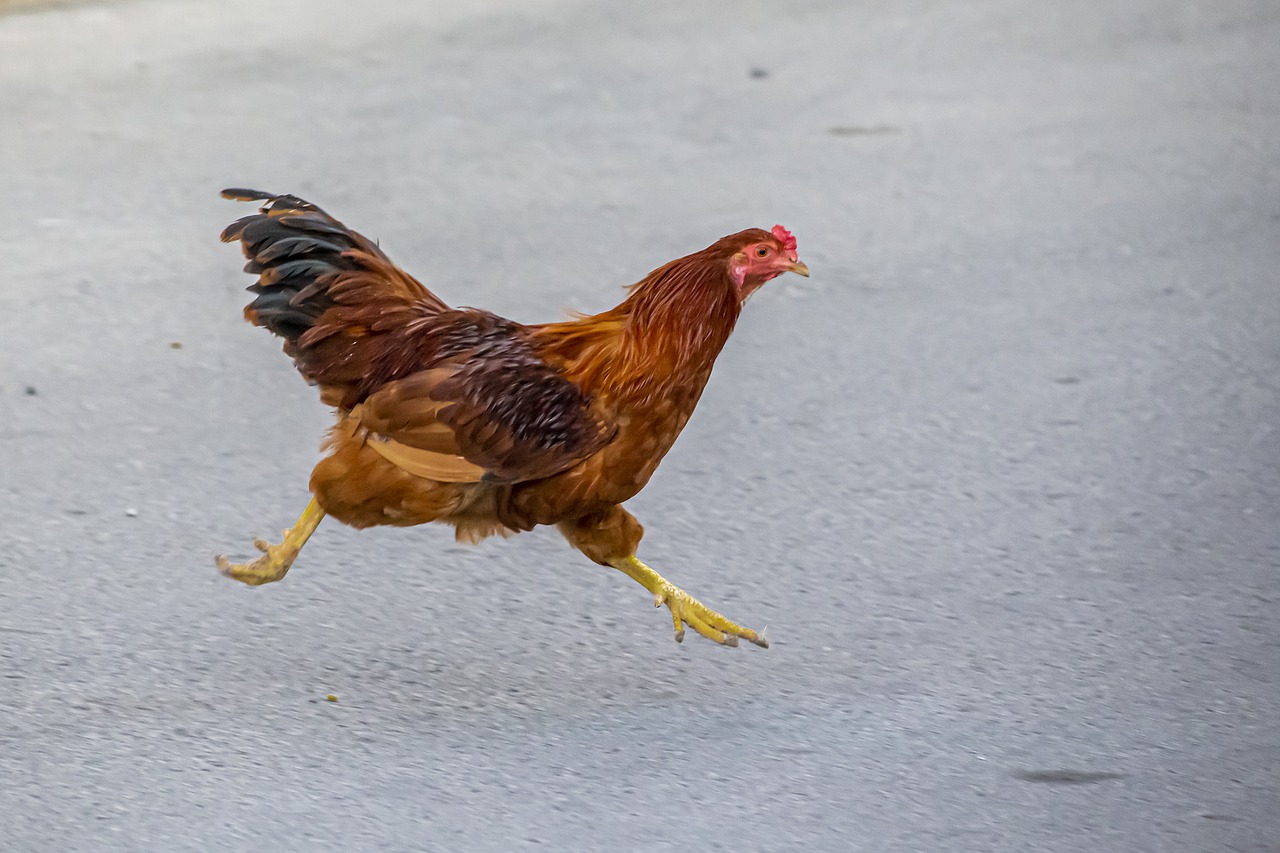
San Marcos La Laguna is teeming with free-roaming chickens. They are in the streets, they are in the yards, they are behind fences and outside of fences. Roosters cockadoodledoo all night, and chickens, big and small, enjoy their life (until they don’t).

Where we used to live for the past 2.5 years, there was one trail that led past chickens and turkeys. My dogs initially craved a bite or two, but soon learned to walk past without giving it much thought. They accepted that killing chickens just wasn’t in the cards for them. 

When we got to San Marcos la Laguna – the first stop of our slow travel road trip – Game showed me she had generalized her walking-past-chickens skills. I walked her off leash, and she was great at strolling past chickens without paying attention to them. Until The Day That Changed Everything.

The Day That Changed Everything

Our morning walk to the lake led us past a metal gate with a gap below, just tall enough for a chicklet to squeeze out into the street. One morning, we were walking past the gate as usual, minding our own business, when a little chicklet ducked under the gate, and tried to cross the f*ing road. By the time I noticed the wee bird, it had strolled right under Game’s muzzle. “What’s that?” Smack! Game lowered her Baskerville-muzzled nose, and that chicklet’s road-crossing intentions were cut short. Game was delighted! Who knew that smashing down your muzzle makes the little feather toys stop moving! So much power! So much fun!

(I found the owner, apologized, and paid the equivalent of US$15 dollars for the chicklet. Yes, that’s certainly the price of a whole flock of grown chickens, but I’d have paid twice as much, too. It was my fault; I certainly deserved the financial punishment.)

Game is a smart dog capable of single-event learning. Going forwards, she didn’t look at chickens like she used to (the way she looks at furniture: boring; whatever). She now looked at chickens – big and small, black and white and brown and red and stripey, egg-laying or cockadoodledoing – like this:

A recall challenge

I wanted to continue having Game off leash in this town of free-roaming fowl. I was only going to stay for a few weeks, but I have never met a recall challenge I didn’t like. I could, of course, also have made this a “leave it” challenge – most trainers probably would; “leave it” seems more intuitive in this context. But recalls are my thing, so that’s what I went with.

I remembered an interesting episode from The Canine Paradigm: Episode 22 – Greyhound Versus Cat. In this episode, Pat modifies the prey drive of his sister’s newly adopted Greyhound to keep him from eliminating the family cat. Pat doesn’t approach this as a recall issue – but his training intrigued me, and I decided to use my chicken challenge to try something similar.

If you haven’t listened to the Greyhound Versus Cat episode on the Canine Paradigm – do so before reading on! Pat’s story will help you understand what I am doing in the videos below. It’s also a great podcast episode. I wouldn’t do it justice by trying to summarize it – just check it out yourself. And in the unlikely case that you haven’t heard of The Canine Paradigm before, get ready to add a new podcast to your personal favorites!

So many new things to try!

I had never used existential food to convince a dog not to chase a prey animal. While I train with kibble a lot in everyday life, I’d generally use higher value reinforcers for something as difficult as a recall away from a chicken. I have also never fed an entire meal after a single click.

Would a large amount of food make up for its lower value (kibble is low value, but an entire meal is a big reward)? Would Game be able to eat an entire meal without lifting her head, and thinking chicken thoughts, right away? Or would it take a while for her to learn that interrupting the behavior of eating caused the restaurant to close? I couldn’t wait to find out.

The Game plan, part 1

I came up with the following rules:

  1. Game was going to earn both her daily meals – breakfast and dinner – for chicken recalls.
  2. For a single chicken recall, she would receive an entire meal.
  3. If she stopped eating (i.e. lifted her head), I’d take away the food.
  4. The next opportunity to eat would only come around at the following mealtime, which, again, would happen in a chicken context.

Session #1

Criteria: No recall cue. I’ll click for her choice to reorient to me after figuring out she can’t get to the chicken.

Session #3 or #4:


Criteria: I’m adding a recall cue, but will reward her even if the leash tightens before she comes back. (I will require the leash to stay loose a few sessions further down the line.)

An unexpected injury

While we were training our way through the chicken challenge, Game hurt herself (she’s a head-through-the-wall kind of dog – it happens surprisingly often). I put her on limited activity for a week. No running, no playing, no training – except for her two daily short leash walks culminating in a chicken recall at meal time.

Session #5ish

Criteria: same criteria as the previous session.

You can see greater intensity and arousal in the video below: if Game’s exercise needs aren’t being met, she turns into a little maniac. She REALLY wants to go for that rooster, and she can’t finish her meal (I learn that if she’s on limited activity, this protocol is setting her up to fail):

My stubbornness pays off!

I stuck with the protocol though, and got to a place where the line would stay loose between the recall and Game returning to me for an uninterrupted meal. (There’s some sessions that I didn’t record.)

Upping the ante: off leash; chickens kept safe behind a fence

Once Game could reliably recall away from chickens without tightening a leash or long line, I found a place she could be off leash, with the chickens safe on the other side of a fence.

Session 10ish:

The rep below is not perfect – you can see Game hesitate before responding; then she realizes there’s no way to get across the fence and comes back. If there had been no fence, the session below would have resulted in a fatality.

Session 11ish:

This one is better: there is the tiniest hesitation (I know what her whiplash turn-on-a-dime-s look like, and this isn’t quite it – but she’s almost got it):

… and we did it: by the subsequent session, I got that perfect turn on a dime with the chickens behind a fence!

The Game plan, part 2: off leash Game with unprotected chickens!

It was time to get some chickens of my own, and up the ante: I wanted to try this off leash and without a fence, and I wasn’t going to subject someone else’s chickens to this experiment.

I LOVE environmental rewards, and I couldn’t resist the temptation to integrate them into the second part of my training plan (here’s where my plan wildly diverges from what Pat Stuart did with his sister’s Greyhound: no cats were going to be harmed in Pat’s training! The questionable ethics you are about to read about are entirely my own.)

The morality of it all

I have no qualms about eating meat, or feeding my dogs meat, and I also have no issues with (quickly) killing an animal in order to eat it. (I do have issues with livestock or wildlife being killed for reasons other than eating.)

I planned on getting two chickens (that way, I’d be able to have at least two reps, even if the first one didn’t go as planned). I’d use the chickens in my training, and then we would eat them. First, I would recall Game away from a chicken in a crate, and reinforce with her usual meal. Then, I’d recall her away from the same chicken outside of the crate, and reinforce with a release to run back and kill the chicken. (I decided that being quickly killed by a dog is no more inhumane than being killed by me, the human. The chicken was going to die and be eaten either way, so using it as a reinforcer seemed morally acceptable to my pragmatic self.)

I was particularly curious about how this experience would translate to the chickens we met in the street: would Game be more likely to engage with me in order to earn that once-in-a-million jackpot of killing (my theory was that she would), or would she become more likely to try and kill on her own time (my theory was that she wouldn’t)? I was determined to find out!

Time to purchase some chickens

I had to run an errand in Antigua, a city some 150km from San Marcos. It was the perfect place to buy chickens from someone I would never see again. I went to a farming supply store that sells chickens, and doesn’t ask questions. And there they were: a big wire cage with lots of poultry crammed in, clucking and sticking their heads out. They were black-and-white barred chickens. My favorite kind, because from a distance, they look like a mad novelist scribbled all over white birds in black ink. They are pretty. I’m sure they are also tasty – if not to humans, then certainly in a raw meal for my dogs. 

I stood there watching the chickens in the cage, and then, just like that, I didn’t want to buy them anymore. It would be lying if I said I couldn’t buy them anymore – it wasn’t that. I’m not particularly sentimental about death; neither my own nor that of another animal. They were going to die sooner or later, and their current life wasn’t exactly amazing. But I looked at their less than ideal existence, crammed into that cage. I imagined their several hours long, less-than-ideal journey back to San Marcos, in a cardboard box, in my hot car. All just to be killed once we got there. It seemed quite pointless, especially since Game and I were going to leave the town of free-roaming poultry soon anyways.

I told myself to remain standing there for another minute, and remind myself of the facts: this was my one chance of buying two chickens far from the scene of the murder I was plotting, and following through on my training plan.

A minute or two later, I still didn’t want to do it. And so I didn’t, because at some point in the last decade, I’ve learned that it is perfectly okay to walk away from a perfectly good plan.

The anticlimactic ending

Game spent the remaining week and a half in San Marcos on a leash around the chickens roaming the streets. And then, we left for Huehuetenango, a city that doesn’t have free roaming chickens – or at the very least, we didn’t meet a single one. I’d like to say that the chicken store chickens lived happily ever after – but that’s pretty unlikely, so I’ll need to end this story on a different note: the feeling I remember. As I walked away from the chicken store, I felt a moment of humaneness. The kind that makes your heart jump. I thought to myself: “I’m humane sometimes. Sometimes, I am kind.” And for a moment, that thought (however misguided it may seem) made me smile. 

Resources mentioned in this post:

Pat Stuart & Glenn Cooke, The Canine Paradigm: Episode 22 – Greyhound Versus Cat (podcast)