Distraction recalls, iteration 6L1: 1/2.0/3.B: working up to off leash recalls: medium value distraction (kibble), high value reward (cream cheese; tacos); location 1/3

I’m naming this post iteration 6.1/1/2-2.0/3.B because in the course of this post, you’ll see me develop my plan to a more nuanced degree that differs from iteration 5 – so I’ll call it iteration 6. In this post, you’ll see me train in location 1 (L1). We’ll work on levels 1 (long line, no barrier), 2.0 (line dragging/back tie as opposed to the original meaning of my 2nd level, which is barrier/helper) and 3 (unprotected distraction, off leash dog) with our now intermediate food distraction: kibble (B). I know my “iteration” categories are long and crazy – no need to keep them straight if you’re reading along. They are mostly just for myself.

August 30, 2023 – session 1: Dead Poultry Park

I started on a long line. Chai knew it was a set-up – and she definitely knew she was on a long line because on the way to the distraction, she reached the end twice. That said, she recalled beautifully on a loose line:

45 minutes later, I took what I thought was a reasonable next step. I was confident because we had done SO well on that loose long line recall. I didn’t let her drag the long line but went straight to off leash!

Session 2: other side of Dead Poultry Park. Off leash!

Again, Chai knew this was a set-up. See her do that double take? It was my spontaneous “AY!” and the second “Schnee!” that got her to come – not the first one, that’s for sure. I’m not calling it a success. I was tempted to repeat right away or soon after, according to what I thought in the moment and say into the camera. BUT I was smart enough to not do that but head home to think some more how to best set us up for success! On the walk home, I came up with what I believe is a better plan than what I said into the camera … but watch the video first! More below!

Instead of sticking to the plan I made in the end of this video – repeat on a long line, then long line dragging, then off leash – I’ll try and find an even higher value reinforcer. What if instead of cream cheese, Chai got a taco for mid-level distractions and above? I know she likes stuff with seasoning, and as far as I have seen over the last several weeks, her stomach is now at a point where she can eat small amounts of most food items and be okay. A single taco recall a day should be fine.

Before I do this, I’ll test whether tacos really are higher value than cream cheese (I think they are but there’s no guarantee). In order to test this, I will pit a taco against cream cheese. I will randomize which item goes left and right, make sure both contrast well with the ground and attempt to use the food item Chai doesn’t choose to lure her away from the one she does choose. Stay tuned! So tomorrow there will be no taco recalls, just a reinforcer test. (I don’t want to feed her more than one taco a day for stomach reasons.)

If the taco is higher value, I will follow the plan I made in the video (long line, long line dragging, off leash), but always reward with a taco. By the time we reach off leash status, Chai hopefully trusts that she will get something amazing if she comes back.

September 1, 2023: reinforcer tests don’t lie! The taco wins!

September 2, 2023: a recall fail(ish). My bad!

Location 1 (we are starting the count over): Toy Play Plaza

I set up smartly so Chai didn’t know we were approaching a set-up and started with the first condition: Chai on a long line, kibble distraction, surprise taco reinforcer. The tacos de birria stand was closed today, so instead, I got a taco de bistec con salsa roja.

Recall reward, ready to go!

I set up with a hidden tripod, kibble on a paper napkin to increase contrast to the ground and then got Chai from the car on a long line and walked right towards the distraction.

I wanted to be sure she saw and smelled it before calling, and since she didn’t know it was a set-up, I made the mistake of letting her get too close. Yep, that’s exactly what my students will often do! By the time the last syllable of “Schneeeeeeeee” had come out of my mouth, Chai reached the kibble and grabbed a mouthful before I tightened the leash. Since we have lots of giving in to leash pressure practice under our harness, she responded to the pressure cue. But unfortunately, at this point, she had already eaten a mouthful of kibble. She happily finished off the taco (until a very alarm-barky dog showed up – you can’t see Chai’s body language change behind the bushes but she clearly felt uncomfortable). She finished the taco anyways because – ¡TACOS! – and then was eager to go back and finish the kibble as well.

Once again, Chai has proven to be a smart, smart Border Collie! She 100% knows when a distraction is or isn’t accessible. I hope that once I have convinced her that if she recalls in the face of a medium or high value distraction, she will ALWAYS get an even higher value reinforcer AND the distraction, she will still choose to recall – even if on occasion, like today, I don’t stop her soon enough in the early stages.

Notes for the next session:

+ Repeat the same session in the same location with a call-no-later-than-here marker for myself!

September 4, 2023: recall on a loose long line!

Location: Toy Play Plaza

We repeated the exact same set-up – today with another taco de birria because the taco de birria folks are back during the week! – in the exact same location. Chai did not see me set up and my tripod was hidden in the shrubbery, but she knew what was going on because we were approaching the same spot from the same angle. This may be part of the reason she was successful today: zero latency on a loose long line!

I don’t mind if the repeat location helped: I want to get as many successful reps under Chai’s harness as possible. Every success – even if she knows it is a set-up – will help her understanding that she is going to receive both the AMAZING reinforcer and the distraction. I hope the weight of the taco reinforcer to eventually help her choose to recall every single time – even off leash, even when the distraction is better than kibble. And every taco Chai collects is putting force behind her recall! C: 1 – distraction: 0!

Notes for next session:

+ Same location, a little closer to sidewalk, long line dragging so I can step on it (make longer with rope?); mark the latest spot to call.

September 5, 2023: a recall oops!

Location: Toy Play Plaza

I called later than planned and didn’t step on the long line … oh well! It happens. We learn from it and move on with our lives!

This session wasn’t all bad, either: while Chai ate some kibble, she then did recall (with latency) on a long line after all. Good puppy making up for the slack in my training!

Notes for the next session:

  • Set myself up for success: tether the long line to a sturdy object and make sure it will stop Chai before she reaches the kibble. If the human (in this case I) isn’t reliable, outsource long-line-stopping to a sturdy object (if there’s one thing you can always rely on, it is a sturdy object).
  • Decide up front when I will call (at a specific point where the long line is still loose) and mark that spot.
  • Since this really is hard for Chai: going forwards, every second formal recall will be easy, distraction-free and rewarded with a taco. I want to put more torque behind that behavior!
  • Repeat all three kibble steps (long line, dragging or back tie, off leash) just like this in 3 locations. No shortcuts!

September 6, 2023: an easy recall and a TACO!

As by the plan I made yesterday, today, I just waited for a good moment (Chai had been sniffing and lifted her head to look at me – then I called), used her formal recall cue, ran away as part of my reinforcement strategy and then fed a taco! We’ll be charging up that cue like there is no tomorrow!

You’ll see me first restrain Game a little so Chai gets the majority of the taco and then I let her dig in as well. A little sibling rivalry may up the distraction value more (neither of my dogs guard food from each other in this kind of scenario; otherwise, I would not do this).

As of point 3 above: after today’s easy taco-rewarded recall, the next one gets to be a distraction one again!

September 7, 2023: back tie recall. It needs a repeat but the set-up works well!

Location: Toy Play Plaza

Today, I used a longer rope (since my long line is only 5 meters) and back-tied Chai so I wouldn’t have to worry about stepping on the line in time. I attached one end of the back tie to the car and made sure my kibble distraction – in its usual spot – was out of reach even on a fully extended rope.

I paid attention to when I’d have to call to make sure Chai had a chance to recall on a loose leash after noticing the distraction.

I followed my plan to a T and called the exact moment I had planned to. Chai did not respond on a loose leash but hit the end of the long line and immediately came back – tongue click, taco and praise – “okay” release to the kibble (I untied the other side of the backtie while Chai had her taco to make sure she could reach the kibble after my release.)

Notes for the next-but-one session (not the next one since that one will be an easy taco one!):

  • Repeat just like today.
  • Make sure I say, “Okay” before Chai starts moving towards the kibble after I’ve handed her the taco.

September 9, 2023: an easy taco recall at Los Dinamos!

Location: Los Dinamos

My friend recorded this recall for me. I wish they had held the camera in Chai’s direction rather than mine so you could see her turn on a dime! In any case, this was an easy surprise recall for Chai: she didn’t know I was going to call her and I didn’t have the taco on me, but in the backpack that we ran to together! I waited for her to look in my direction before calling and running. Superpuppy!

September 11, 2023: another back-tie attempt

Location 1: Toy Play Plaza

I was going to repeat the EXACT same set-up as last time, but my car was blocked in by another car, so I couldn’t use it as a back-tie attachment. We walked to Toy Play Plaza and improvised. The sidewalk I’m setting up on in this video is the one right before the row of bushes on the other side of which I usually have the distraction. However, since I couldn’t tie the rope to my car today, I had to change the location and our angle of approach. This time, the distraction is on the sidewalk and we are coming around the corner, out of the park.

I’m surprised that Chai did NOT seem to know it was a set-up even though I had tethered her out of sight when setting up. (The reason I suspect she doesn’t know is that she takes her time approaching the distraction and slows down to sniff around the lamp post.)

The second observation I made today is that I truly believe Chai thought she was off leash: I had hooked the back tie to her harness before taking off the regular leash with my usual announcement (“Leash off”). I had used the regular leash for tethering. The regular leash is, just like my pink long line, heavy enough that Chai probably feels it and knows she’s not “free.” The yellow rope, on the other hand, is extremely light. I don’t think Chai realized she was wearing it before hitting the end.

I can’t wait to find out what will happen next time, when I back-tie her to the car again and put the distraction back in its usual location (which is only about 5 meters from the spot on the sidewalk you can see in this video).

Today’s recall reinforcer: the first one of these three tacos de bistec with piña, aguacate y habanero.

Points for me: I called Chai when she reached the spot I had predetermined to call and I said “Okay” early – when she was still busy with the taco. (You can’t hear the “okay” in the video because I’m not saying it loud enough for the camera mic to pick up.)

Notes for the next two sessions:

+ Next session will be an easy (distraction-free) taco recall anywhere.
+ For the session after, I’ll go back to Toy Play Plaza and repeat that same set-up. Remember to “okay” release before Chai releases herself to the kibble!

September 12, 2023: an easy taco recall at Dead Poultry Park

Our next recall will be a back-tied one at Toy Play Plaza again! Let’s find out if it’s true that three time’s a charm!


September 13, 2023: a back tie recall success!! 3 IS a charm!

Location 1/3: Toy Play Plaza

There are several elements I am happy with in this video. The first and obvious one is that Chai recalled before hitting the back tie. YAAAAAAAAAY!!!!

The second is that I stuck to my criterion of when to call, and the third one is that I got the “Okay” release in before Chai started moving towards the kibble.

She did not finish her taco this time. (Good thing it was the last one of 3 – I’ll get a different kind next.) I suspect the habanero may have been a bit much. Chai has skillfully opened every single little plastic bag of salsa people have dropped that I’ve seen her find and slurped down the salsa, spicy or not – but maybe there is a certain degree of spicyness she’s not a fan of and this particular taco may have had too much salsa in it. Or maybe it’s the piña? In any case, I’ll go back to our tried and true tacos the birria!

Notes for the next session:

+ Taco de birria
+ Easy, distraction-free recall
+ Why not do it in the exact same location we usually have distractions set up?

I also just had an idea for the next session after – splitting things down even more finely: what if for the first off leash recall, I put just the paper kitchen towel (visual target) in its usual location – without kibble or with brown cardboard scraps (looking like kibble) on it? Let’s do this, really splitting things down as finely as we possibly can!

Thursday, September 14, 2023

It’s easy-taco-recall day … for a change in the exact same location I did the last two distraction ones on a back tie. Look at how well Chai does!

Since she offers a check-in, I use it as a start button to call her. Not required – never a bad thing if you happen to get reorientation and can mark it with a recall cue though!

August 15, 2023: recall away from an empty visual target in its usual location

Two lessons for next time:

  • Get the reinforcer out faster so Chai isn’t tempted to turn around and go for the target/distraction in between responding to her recall cue and receiving her reinforcer (this is what happened today).
  • Say “Okay” earlier so she only starts moving towards the target/distraction after I’ve given the release cue.

September 16, 2023: SUCCESS!!!

Off leash, unprotected intermediate distraction (kibble), SUCCESSFUL RECALL!!! Wooohoooooo! Go Chai and C!

We’re going out with a bang: this is likely the last recall session before I head to NYC and Austria (without Chai).

Here’s the plan – we will keep going as soon as I’m back en la ciudad que lo tiene todo (according to a billboard near me):

  • Next recall: easy taco recall (whenever possible, get tacos from the stand across the street from the community center).
  • Repeat long line/kibble, back tie/kibble, off leash with empty visual target (if the location calls for one), off leash/kibble in 2 more locations.
  • Intersperse all distraction recalls with an easy taco recall and always release Chai to the distraction after the recall.
  • Then, go through 3 locations, using all the same splitting steps, with a high-value distraction (chicken or liver). If it turns out to be necessary, test out what Chai prefers and, if it’s not a taco, switch to a different and even higher value street food reinforcer.

… one wild and precious, E3 Training geekery: food motivation in dog training

This episode is a 2/3 on the canine nerd level scale (*). Chrissi talks about various ways of increasing food motivation, defines reinforcement, and offers various tips and tricks for special treats.

One more research finding I would like to share, and did not mention in this episode: an experiment showed that small dogs preferred large pieces of kibble to small pieces of kibble – presumably because one larger piece smells more enticing than one smaller piece. If you train with kibble, you may be able to not only up the value of your food by using more than a single treat per rep, but by using a single, but larger piece of kibble. Try buying breed-specific kibble made for Great Danes for your Maltese, and see what happens! (Note: I have not found the scientific paper, if there is one, that goes with the experiment cited above – treat these findings with a grain of salt.)

(1) The canine nerd level scale for special interest episodes (titled “Dog geekery”):

Level 1: of interest for pet or companion dog owners

Level 2: for the engaged dog enthusiast who already knows things, and wants to learn even more

Level 3: for highly educated dog and animal training folks and professionals who love digging into the nerdy details of theory and philosophy


Wanna learn more about dogs and training from Chrissi? Join their August class at Fenzi Dog Sports Academy: Calling All Dogs!

The Chicken Experiment

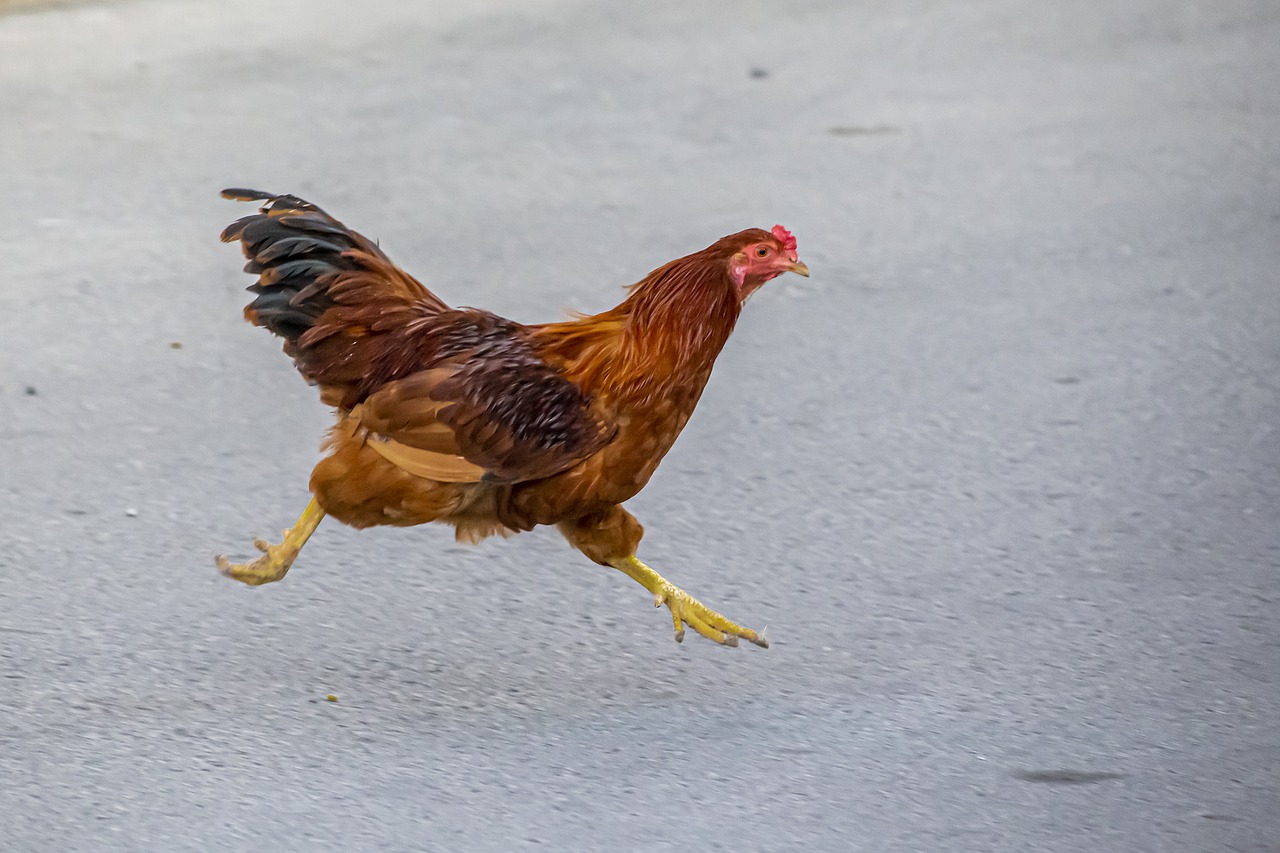
San Marcos La Laguna is teeming with free-roaming chickens. They are in the streets, they are in the yards, they are behind fences and outside of fences. Roosters cockadoodledoo all night, and chickens, big and small, enjoy their life (until they don’t).

Where we used to live for the past 2.5 years, there was one trail that led past chickens and turkeys. My dogs initially craved a bite or two, but soon learned to walk past without giving it much thought. They accepted that killing chickens just wasn’t in the cards for them. 

When we got to San Marcos la Laguna – the first stop of our slow travel road trip – Game showed me she had generalized her walking-past-chickens skills. I walked her off leash, and she was great at strolling past chickens without paying attention to them. Until The Day That Changed Everything.

The Day That Changed Everything

Our morning walk to the lake led us past a metal gate with a gap below, just tall enough for a chicklet to squeeze out into the street. One morning, we were walking past the gate as usual, minding our own business, when a little chicklet ducked under the gate, and tried to cross the f*ing road. By the time I noticed the wee bird, it had strolled right under Game’s muzzle. “What’s that?” Smack! Game lowered her Baskerville-muzzled nose, and that chicklet’s road-crossing intentions were cut short. Game was delighted! Who knew that smashing down your muzzle makes the little feather toys stop moving! So much power! So much fun!

(I found the owner, apologized, and paid the equivalent of US$15 dollars for the chicklet. Yes, that’s certainly the price of a whole flock of grown chickens, but I’d have paid twice as much, too. It was my fault; I certainly deserved the financial punishment.)

Game is a smart dog capable of single-event learning. Going forwards, she didn’t look at chickens like she used to (the way she looks at furniture: boring; whatever). She now looked at chickens – big and small, black and white and brown and red and stripey, egg-laying or cockadoodledoing – like this:

A recall challenge

I wanted to continue having Game off leash in this town of free-roaming fowl. I was only going to stay for a few weeks, but I have never met a recall challenge I didn’t like. I could, of course, also have made this a “leave it” challenge – most trainers probably would; “leave it” seems more intuitive in this context. But recalls are my thing, so that’s what I went with.

I remembered an interesting episode from The Canine Paradigm: Episode 22 – Greyhound Versus Cat. In this episode, Pat modifies the prey drive of his sister’s newly adopted Greyhound to keep him from eliminating the family cat. Pat doesn’t approach this as a recall issue – but his training intrigued me, and I decided to use my chicken challenge to try something similar.

If you haven’t listened to the Greyhound Versus Cat episode on the Canine Paradigm – do so before reading on! Pat’s story will help you understand what I am doing in the videos below. It’s also a great podcast episode. I wouldn’t do it justice by trying to summarize it – just check it out yourself. And in the unlikely case that you haven’t heard of The Canine Paradigm before, get ready to add a new podcast to your personal favorites!

So many new things to try!

I had never used existential food to convince a dog not to chase a prey animal. While I train with kibble a lot in everyday life, I’d generally use higher value reinforcers for something as difficult as a recall away from a chicken. I have also never fed an entire meal after a single click.

Would a large amount of food make up for its lower value (kibble is low value, but an entire meal is a big reward)? Would Game be able to eat an entire meal without lifting her head, and thinking chicken thoughts, right away? Or would it take a while for her to learn that interrupting the behavior of eating caused the restaurant to close? I couldn’t wait to find out.

The Game plan, part 1

I came up with the following rules:

  1. Game was going to earn both her daily meals – breakfast and dinner – for chicken recalls.
  2. For a single chicken recall, she would receive an entire meal.
  3. If she stopped eating (i.e. lifted her head), I’d take away the food.
  4. The next opportunity to eat would only come around at the following mealtime, which, again, would happen in a chicken context.

Session #1

Criteria: No recall cue. I’ll click for her choice to reorient to me after figuring out she can’t get to the chicken.

Session #3 or #4:


Criteria: I’m adding a recall cue, but will reward her even if the leash tightens before she comes back. (I will require the leash to stay loose a few sessions further down the line.)

An unexpected injury

While we were training our way through the chicken challenge, Game hurt herself (she’s a head-through-the-wall kind of dog – it happens surprisingly often). I put her on limited activity for a week. No running, no playing, no training – except for her two daily short leash walks culminating in a chicken recall at meal time.

Session #5ish

Criteria: same criteria as the previous session.

You can see greater intensity and arousal in the video below: if Game’s exercise needs aren’t being met, she turns into a little maniac. She REALLY wants to go for that rooster, and she can’t finish her meal (I learn that if she’s on limited activity, this protocol is setting her up to fail):

My stubbornness pays off!

I stuck with the protocol though, and got to a place where the line would stay loose between the recall and Game returning to me for an uninterrupted meal. (There’s some sessions that I didn’t record.)

Upping the ante: off leash; chickens kept safe behind a fence

Once Game could reliably recall away from chickens without tightening a leash or long line, I found a place she could be off leash, with the chickens safe on the other side of a fence.

Session 10ish:

The rep below is not perfect – you can see Game hesitate before responding; then she realizes there’s no way to get across the fence and comes back. If there had been no fence, the session below would have resulted in a fatality.

Session 11ish:

This one is better: there is the tiniest hesitation (I know what her whiplash turn-on-a-dime-s look like, and this isn’t quite it – but she’s almost got it):

… and we did it: by the subsequent session, I got that perfect turn on a dime with the chickens behind a fence!

The Game plan, part 2: off leash Game with unprotected chickens!

It was time to get some chickens of my own, and up the ante: I wanted to try this off leash and without a fence, and I wasn’t going to subject someone else’s chickens to this experiment.

I LOVE environmental rewards, and I couldn’t resist the temptation to integrate them into the second part of my training plan (here’s where my plan wildly diverges from what Pat Stuart did with his sister’s Greyhound: no cats were going to be harmed in Pat’s training! The questionable ethics you are about to read about are entirely my own.)

The morality of it all

I have no qualms about eating meat, or feeding my dogs meat, and I also have no issues with (quickly) killing an animal in order to eat it. (I do have issues with livestock or wildlife being killed for reasons other than eating.)

I planned on getting two chickens (that way, I’d be able to have at least two reps, even if the first one didn’t go as planned). I’d use the chickens in my training, and then we would eat them. First, I would recall Game away from a chicken in a crate, and reinforce with her usual meal. Then, I’d recall her away from the same chicken outside of the crate, and reinforce with a release to run back and kill the chicken. (I decided that being quickly killed by a dog is no more inhumane than being killed by me, the human. The chicken was going to die and be eaten either way, so using it as a reinforcer seemed morally acceptable to my pragmatic self.)

I was particularly curious about how this experience would translate to the chickens we met in the street: would Game be more likely to engage with me in order to earn that once-in-a-million jackpot of killing (my theory was that she would), or would she become more likely to try and kill on her own time (my theory was that she wouldn’t)? I was determined to find out!

Time to purchase some chickens

I had to run an errand in Antigua, a city some 150km from San Marcos. It was the perfect place to buy chickens from someone I would never see again. I went to a farming supply store that sells chickens, and doesn’t ask questions. And there they were: a big wire cage with lots of poultry crammed in, clucking and sticking their heads out. They were black-and-white barred chickens. My favorite kind, because from a distance, they look like a mad novelist scribbled all over white birds in black ink. They are pretty. I’m sure they are also tasty – if not to humans, then certainly in a raw meal for my dogs. 

I stood there watching the chickens in the cage, and then, just like that, I didn’t want to buy them anymore. It would be lying if I said I couldn’t buy them anymore – it wasn’t that. I’m not particularly sentimental about death; neither my own nor that of another animal. They were going to die sooner or later, and their current life wasn’t exactly amazing. But I looked at their less than ideal existence, crammed into that cage. I imagined their several hours long, less-than-ideal journey back to San Marcos, in a cardboard box, in my hot car. All just to be killed once we got there. It seemed quite pointless, especially since Game and I were going to leave the town of free-roaming poultry soon anyways.

I told myself to remain standing there for another minute, and remind myself of the facts: this was my one chance of buying two chickens far from the scene of the murder I was plotting, and following through on my training plan.

A minute or two later, I still didn’t want to do it. And so I didn’t, because at some point in the last decade, I’ve learned that it is perfectly okay to walk away from a perfectly good plan.

The anticlimactic ending

Game spent the remaining week and a half in San Marcos on a leash around the chickens roaming the streets. And then, we left for Huehuetenango, a city that doesn’t have free roaming chickens – or at the very least, we didn’t meet a single one. I’d like to say that the chicken store chickens lived happily ever after – but that’s pretty unlikely, so I’ll need to end this story on a different note: the feeling I remember. As I walked away from the chicken store, I felt a moment of humaneness. The kind that makes your heart jump. I thought to myself: “I’m humane sometimes. Sometimes, I am kind.” And for a moment, that thought (however misguided it may seem) made me smile. 

Resources mentioned in this post:

Pat Stuart & Glenn Cooke, The Canine Paradigm: Episode 22 – Greyhound Versus Cat (podcast)

Less is more dogs

Do you have a physically healthy sports dog who is doing what you ask of them … but kind of slowly? Who knows their cues, but gets distracted easily? Who’s physically able to run, but chooses to trot when you call or send them out? Who takes their time picking up the dumbbell, or choosing the correct scent article?

You may be having a less is more dog. Let me tell you about less is more dogs by means of the example of Greyhound Fanta – the bestest dog of them all. Fanta was amazing. He also was a less is more dog.

Training juice as a finite resource

Less is more dogs have a finite amount of play/training juice available in a given week. Training juice is what powers our training and play sessions. How much a less is more dog can put into each session depends on how often you train/play:

Let’s say Fanta has 70 units of training juice a week.

Scenario 1: 

I train/play with Fanta every day for 10 minutes. That makes 70 minutes a week. Fanta needs to spread out his training juice over all the sessions we train/play. 70 units of training juice divided by 70 minutes equals 1 unit of training juice per minute. This manifests in enthusiasm when he’s in a good mood, but most sessions include getting distracted or checking out. I need to work quite hard to keep him engaged, even when we’re working in the living room.

Scenario 2: 

I train/play with Fanta every day for 5 minutes. That makes 35 minutes a week. 70 units divided by 35 minutes equals 2 units of training juice per minute! (Or maybe not; I’ve never been good at math.) 2 is twice as much as 1! Now, Fanta stays mostly engaged. This is more fun!

Scenario 3: 

I train/play with Fanta every second day for 5 minutes: Monday, Wednesday, Friday, Sunday – 4 times 5 equals 20 minutes a week. 70 units divided by 20 minutes equals 3.5 units of training juice per minute! Now we’re talking: the fun skyrockets; I have a dog who can engage even in more distracting environments, and who’ll sometimes even push me to play!

An experiment

Have you been doing everything right – using effective reinforcers, keeping your dog physically and mentally healthy – and yet, you can’t help but feel like they are a little bit flat? They might be a less is more dog! There are less is more dogs among all breeds – even traditional working breeds. Let’s find out if your dog is one of them: if they are, there’s a simple trick to getting more bang for your buck in the future! Try the simple experiment below, and report back:

+ For the next two weeks, shorten the length of each play (or training) session – cut it in half, and see what happens. So if you’ve been playing and training for 10 minutes a day, only do 5.

+ Do only half your usual number of play/training sessions overall. If you’ve been training and playing every day, only train and play every second day for the next two weeks.

Of course, your dog will continue having all their other privileges: the usual amount of walks, snuggles, or dog/dog socialization. The only variable you are going to change is the amount of formal play/training. This experiment isn’t about depriving your dog – it’s about slowing down.

Observe what happens to your dog’s play and training attitude, and let me know in the comments!

How to quit stuff and be happy instead (a post about people rather than dogs)

I’m still reading The Science of Consequences, and yet another fascinating fact just caught my attention: quitting (1). There’s a chapter on addictions. What I found most interesting is the paragraph about smoking. I like the “smoking” example, because smoking is a nice metaphor for almost anything you’d like to stop doing. Smoking is less hard to quit than certain illegal drugs (the reinforcement value and withdrawal agony of which are greater), and (as someone who smoked for 10 years and then quit), I would venture that the nature of a cigarette addiction is similar to that of other common addictions: drinking, eating, buying things on the Internet. What do these addictions have in common? They are respectable addictions – we can indulge them in public -, and their reinforcement value increases with the amount of stress we experience in our lives, and they often include a peer pressure element. So what did the studies find about smoking, and how can we take advantage of tit?

1. Cash incentives

Studies found that cash incentives increase people’s chance of quitting smoking. (Programs designed that way do not necessarily require lots of public funding: there are programs who ask people to put up their own money and then earn it back – or lose it, if they give in to the temptation.)

2. Shaping is more effective than quitting cold turkey

A study of heavy smokers who wanted to quit was put into two groups: one group were asked to quit cold turkey, i.e. from one day to the next. The other group was shaped: they were asked to smoke less and less every day. In both cases, people who successfully managed to not smoke were reinforced with money. Almost fifty percent of the shaping group succeeded in quitting, but only a third of the cold turkey group succeeded.

3. Progressive schedules of reinforcement are more effective than fixed ones

Another study compared fixed and progressive schedules. (In the fixed schedule, the reward was always the same, in the progressive schedule, the rewards got smaller over time.) Both groups were twice as likely to quit as the control group (who also wanted to quit, but didn’t get positively reinforced for not smoking). However, participants on the progressive schedule were least likely to relapse after the end of the program.

These three findings about studies are all you need to know to quit your own bad habits. What’s a bad habit? Well, anything you’d like to stop doing. Here’s how:

1. You don’t need a fancy program to take advantage of cash incentives. Just ask a friend to help you quit, give her a substantial amount of your hard-earned money, and set up a contract specifying under what circumstances you get your money back. Maybe you get 10/20/100/500 euros for every day/every weekend you don’t have a drink, or don’t snack on sweet temptations?

If you want to integrate punishment in your treatment plan as well, specify in the contract that for every drink/chocolate bar you have, your friend must donate 10/20/100/500 euros (your euros, which will be lost forever!) to an organization you despise, such as a cult, a right-wing political organization, or the sports team you hate.

2. Don’t force yourself to stop your addictions from one day to the next, but gradually decrease their extent. If, for example, you used to drink 20 bottles of beer every weekend, on the first weekend of your therapy plan, you’ll limit yourself to 15 bottles, on the second weekend, to 10 bottles etc. If you used to eat 5 chocolate bars ever day, only have four and a half on day one, four on day two, three and a half on day three etc.

3. Design a progressive reinforcement schedule with your friend. In the beginning, you’ll earn back a lot of money for not engaging in your favorite vices. Gradually, the amount of money you make will decrease. This way, you are most likely to stay “clean” after you’ve earned all your money back.

(1) Schneider, Susan M.: The Science of Consequences. p. 230-33.